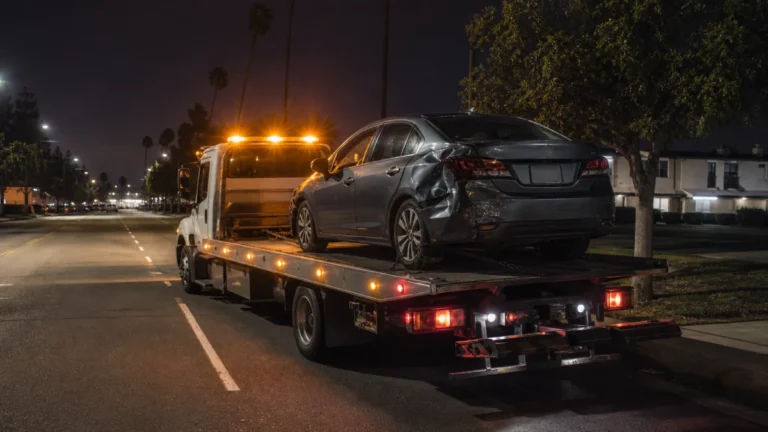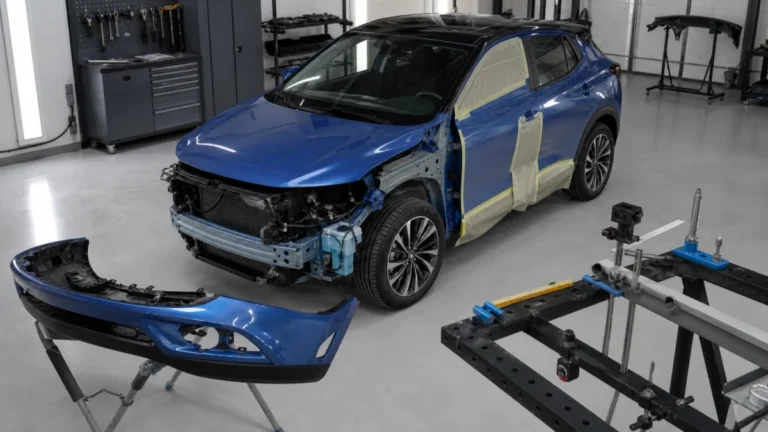
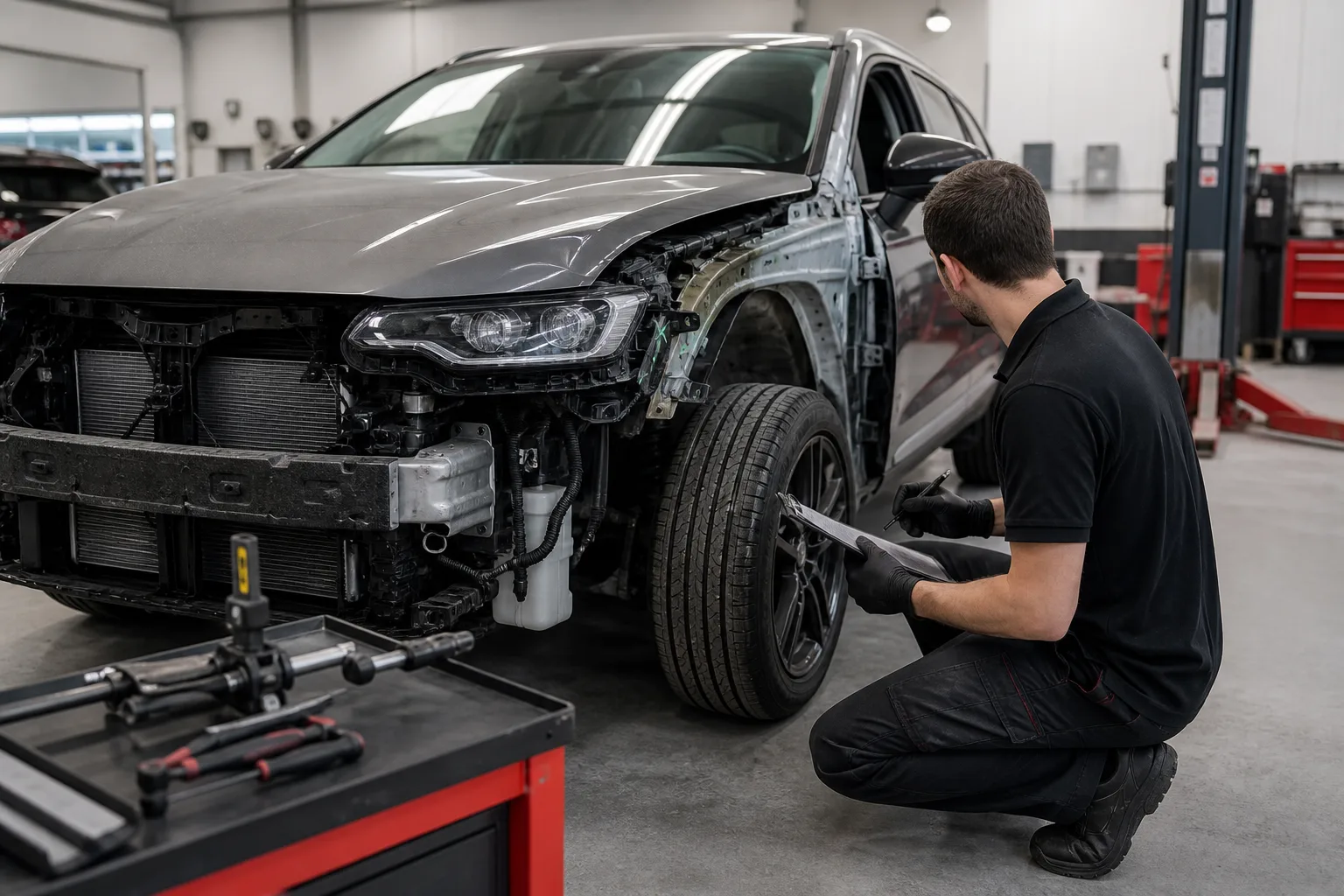
After a collision, the most obvious damage is usually the bumper, fender, hood, trunk, or paint. Structural damage can be harder to see. A vehicle may still start and drive, but the impact may have shifted mounting points, affected alignment, or changed how panels and safety components fit together.
Frame damage does not always mean the vehicle is beyond repair. It does mean the repair plan needs careful measurement, documentation, and the right equipment. Woodley Collision provides frame straightening and structural collision repair support for Van Nuys drivers who need a deeper inspection after impact damage.
What Frame Damage Can Look Like
Modern vehicles use unibody structures, reinforcement sections, crumple zones, rails, aprons, crossmembers, and mounting points designed to manage crash energy. When those areas move, the visible symptoms may show up somewhere else on the vehicle. A bumper gap, hood misalignment, trunk that does not close cleanly, or steering pull can all point to damage beyond the exterior panel.
Because these issues can affect safety systems and future repair quality, structural concerns should not be judged from appearance alone. The vehicle needs a repair-focused inspection that looks at fit, measurements, impact direction, and connected components.
Warning Signs After an Accident
- The vehicle pulls to one side or the steering wheel is no longer centered.
- Doors, hood, or trunk are harder to open or close.
- Panel gaps look uneven from one side to the other.
- Tires show unusual wear after the collision.
- There are new vibration, rubbing, or clunking sounds.
- The bumper, lights, or radiator support no longer sit square.
- The vehicle was hit near a wheel or corner.
- Airbags deployed or seat belt components locked.
Why Structural Measurement Matters
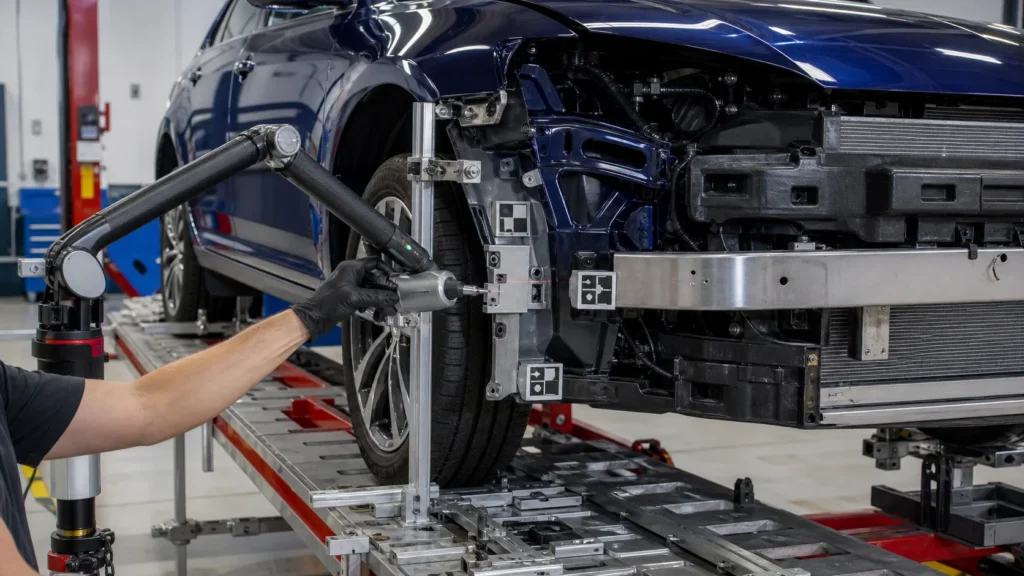
A visual inspection can identify obvious problems, but it cannot confirm every structural measurement. Proper repair planning may require measuring points against manufacturer specifications. If a rail, apron, or mounting point is out of position, simply replacing the outer parts may leave the vehicle with poor fit, alignment issues, or compromised repair quality.
That is why frame-related collision repair should be handled as part of a complete collision repair plan. The goal is not only to make the vehicle look better, but to restore fit, function, and repair integrity.
Common Areas That Need Closer Review
| Impact area | What may need inspection |
|---|---|
| Front corner hit | Apron, rail, suspension mounting, bumper reinforcement, lamps |
| Rear impact | Rear body panel, trunk floor, rail ends, bumper reinforcement |
| Side impact | Rocker, pillars, door openings, side structure, glass fit |
| Wheel impact | Suspension, alignment, steering, subframe, related mechanical parts |
| Undercarriage impact | Crossmembers, floor sections, exhaust, shields, fluid lines |
Insurance and Frame Repairs
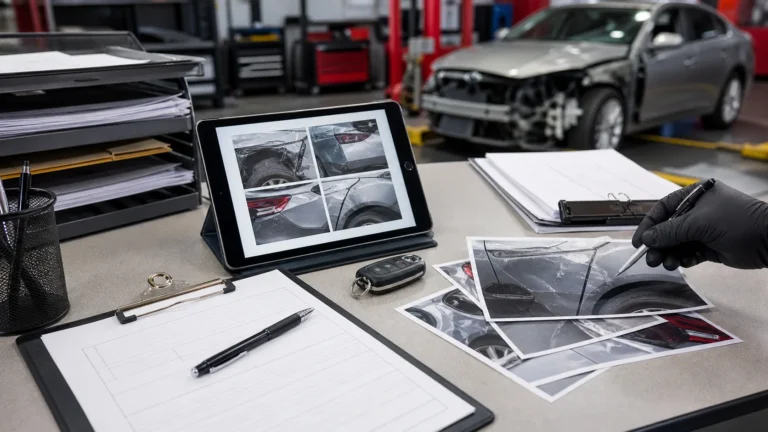
If insurance is involved, structural findings should be documented clearly. Initial estimates are often based on visible damage. After teardown and measurement, additional damage may be found. You can review our insurance repair information to understand how documentation and claim communication fit into the repair process.
Schedule a Structural Collision Inspection
If your vehicle has uneven gaps, steering changes, alignment concerns, or damage near a wheel or structural area, do not rely on guesswork. Request a collision repair estimate from Woodley Collision in Van Nuys or call 747-745-5353. A careful inspection is the right first step before parts are ordered or cosmetic repairs begin.