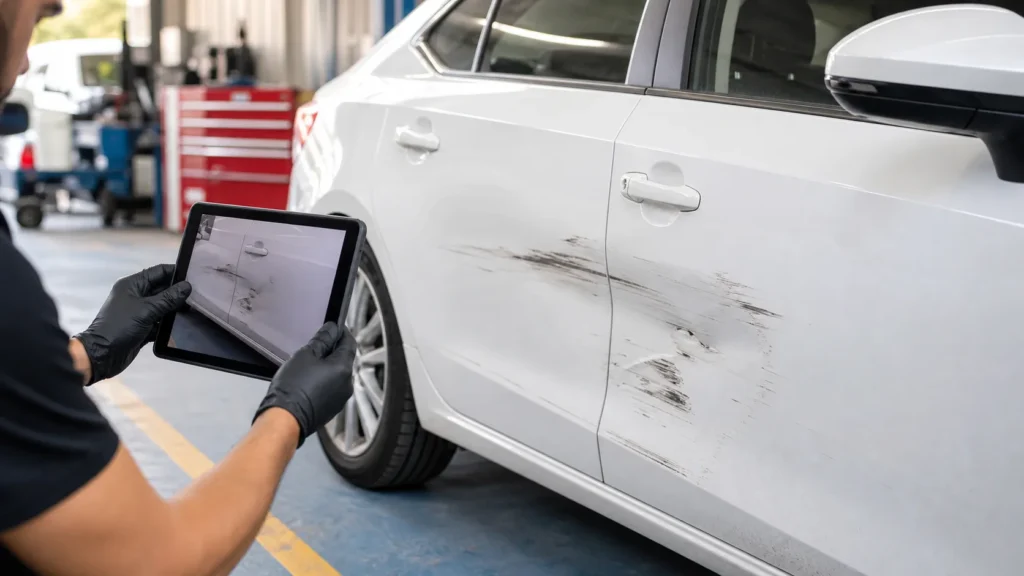
Parking lot damage is one of the most common reasons drivers contact an auto body shop. A tight turn, door impact, shopping cart, bumper tap, or low-speed sideswipe can leave behind scuffs, dents, paint transfer, cracked plastic, or uneven panel gaps. The repair can be simple, but it can also involve more than the mark you see at first.
This guide is written for drivers in Van Nuys, North Hollywood, Burbank, and nearby communities who need to decide whether a parking lot scrape is cosmetic or should be inspected by a professional.

Quick Triage: What Type of Damage Is It?
Start by identifying the type of damage. Paint transfer, clear coat scratches, dents, cracked bumper plastic, and panel misalignment require different repair approaches. Our guide to car scratch repair explains scratch depth in more detail, but parking lot damage often combines several problems in one area.
Surface marks
Paint transfer or light scuffs may sit on top of the clear coat. Controlled cleanup or polishing may help if the finish underneath is intact.
Panel deformation
Dents, creases, and stretched metal can require dent repair, especially near body lines or panel edges.
Part damage
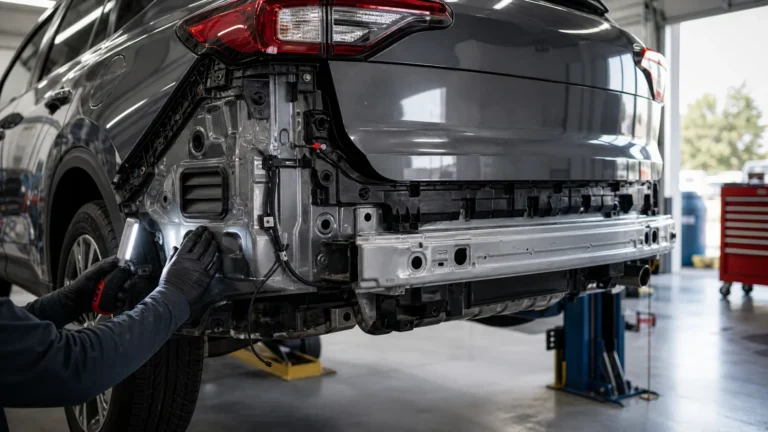
Broken bumper tabs, loose moldings, cracked lamps, and bent brackets need inspection beyond the painted surface.
Parking Lot Damage Inspection List
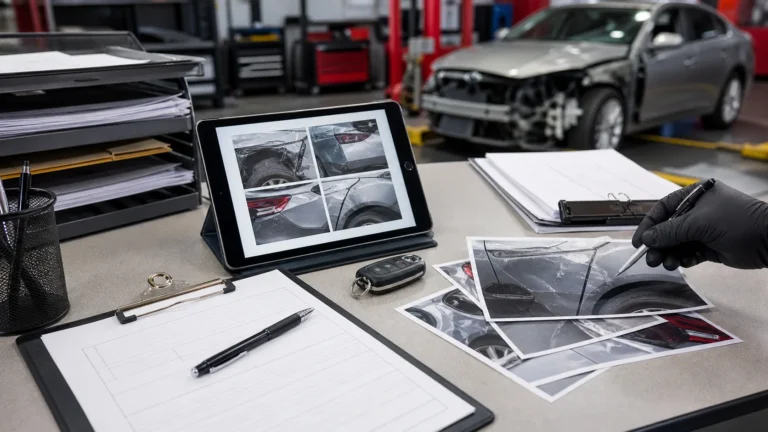
- Take a wide photo showing the whole side or corner of the vehicle.
- Take angled close-ups so dents and creases show in the reflection.
- Check whether the door, trunk, hood, or bumper sits unevenly.
- Look for cracked paint, exposed primer, or bare metal.
- Test nearby lamps, parking sensors, and camera views if equipped.
- Listen for rubbing when opening doors or turning the wheel.
- Write down where and when the damage happened.
Repair Options by Damage Type
| Damage type | Typical repair discussion | Why it matters |
|---|---|---|
| Paint transfer only | Cleaning, polishing, or refinishing review | Transfer can hide deeper scratches |
| Small door ding | Dent repair evaluation | Sharp dings near body lines are harder to correct |
| Bumper scrape | Repair or replacement decision | Tabs and retainers may be broken behind the cover |
| Creased quarter panel | Auto body and paint | Metal shaping and color matching may be needed |
| Door edge impact | Alignment, sealing, and refinishing inspection | Door fit and water sealing can be affected |
Why Paint Matching Is Part of the Conversation
If refinishing is needed, the goal is not simply to cover the damaged area. The new finish must match the vehicle color, metallic pattern, gloss, and surrounding panels. This is especially important on pearl, metallic, tri-coat, and previously repaired finishes. For a deeper look at the process, read how auto body paint matching works.
Area-Specific Notes
Parking damage is common near apartment buildings, shopping centers, schools, and office parking in Studio City, Valley Glen, Panorama City, and Northridge. If the damage is on a frequently used door or bumper corner, scheduling an estimate early can prevent loose trim, exposed paint, or cracked plastic from getting worse.
When to Skip DIY Products
DIY rubbing compounds and dent pullers can make a repair harder if they are used aggressively. Over-polishing can thin clear coat. Pulling a dent without controlling the surrounding metal can create high spots. If the mark catches a fingernail, crosses a body line, or includes a dent, start with a professional estimate instead.
Woodley Collision can inspect parking lot damage, explain likely repair options, and help you decide whether the issue belongs under scratch repair, dent repair, bumper repair, or broader collision repair. Request a free estimate or call 747-745-5353.