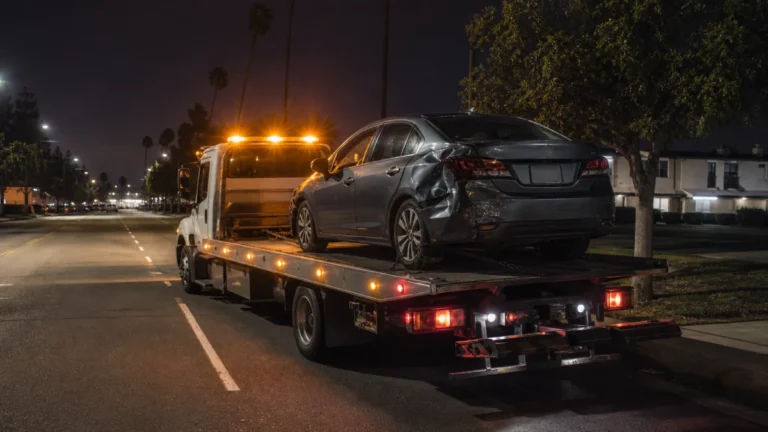
Bumper damage is one of the most common reasons Van Nuys drivers call an auto body shop. A tight parking lot scrape, a low-speed rear-end impact on Sherman Way, or a front-corner hit near the 405 can leave damage that looks simple at first. The real question is whether the bumper can be repaired or whether replacement is the better repair path.
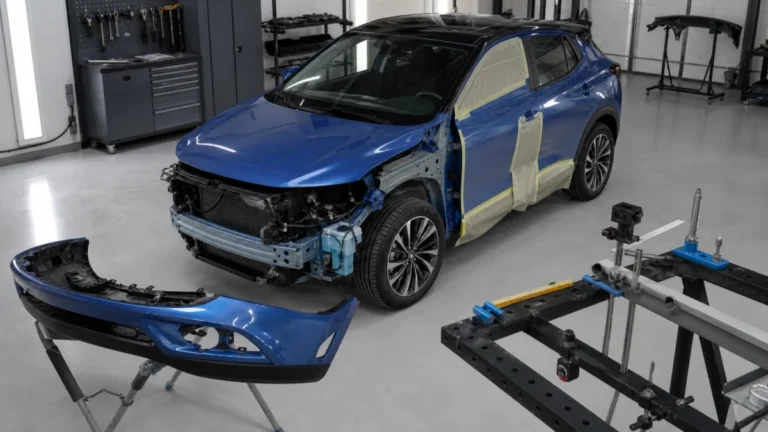
The answer depends on more than the painted outer surface. A modern bumper system may include the bumper cover, absorber, reinforcement bar, brackets, mounting tabs, lights, wiring, parking sensors, radar-related components, and trim. Some damage can be repaired cleanly. Other damage affects fit, strength, or sensor mounting in ways that make replacement more practical.
What People Call a Bumper Is Usually a System
Most drivers are talking about the painted plastic bumper cover when they say the bumper is damaged. That cover is important for appearance and fit, but it is not the only part involved in a collision. Behind it, the vehicle may have energy-absorbing material, metal reinforcement, brackets, clips, wiring, lamps, blind spot components, parking assist sensors, or lower shields.
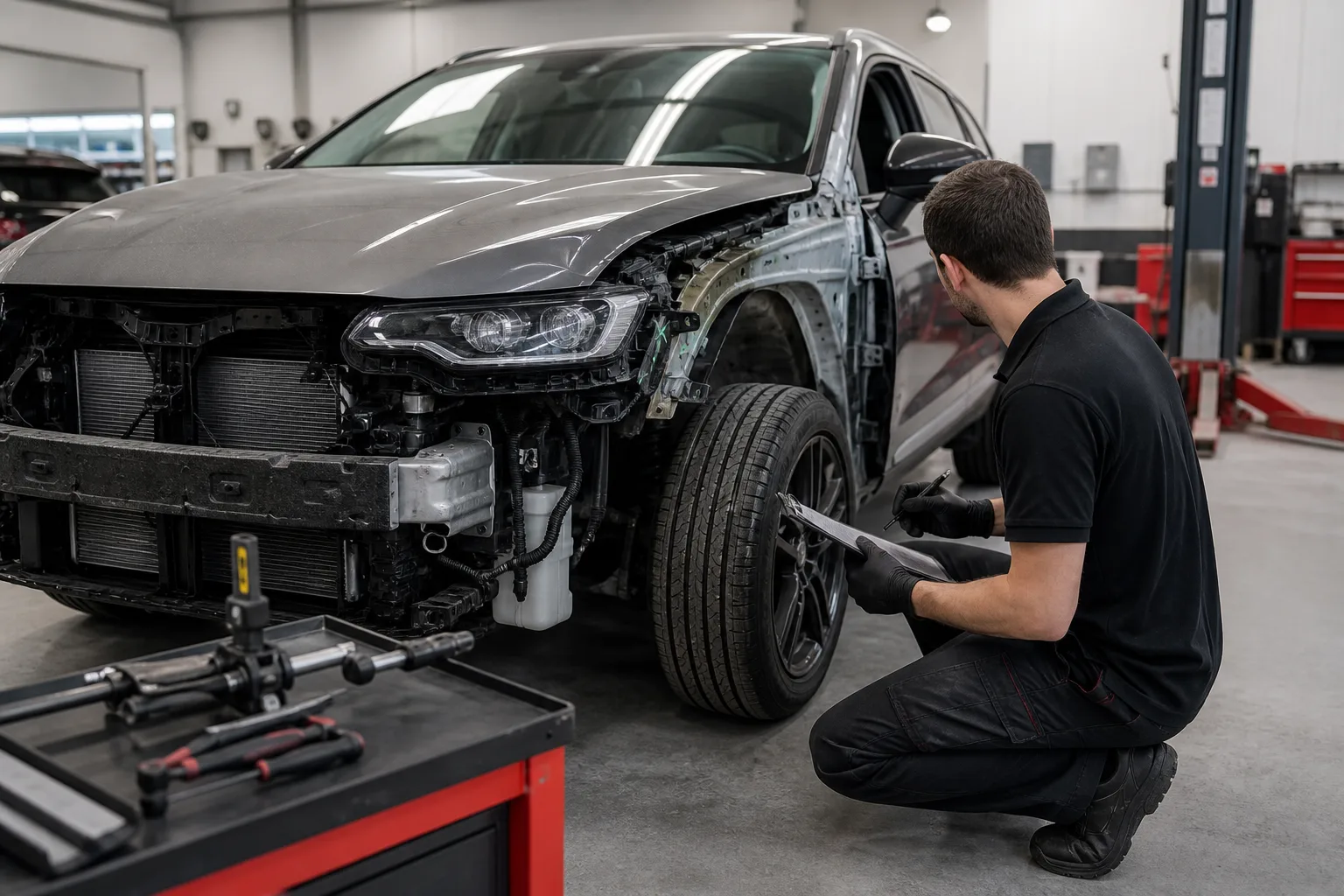
Because the visible cover can flex and spring back, a vehicle may look better than it really is. A cover can also crack around hidden mounting points while the outside damage appears small. That is why a real bumper repair assessment looks at alignment, attachment points, surrounding panels, lights, and any collision symptoms.
When Bumper Repair May Be the Right Choice
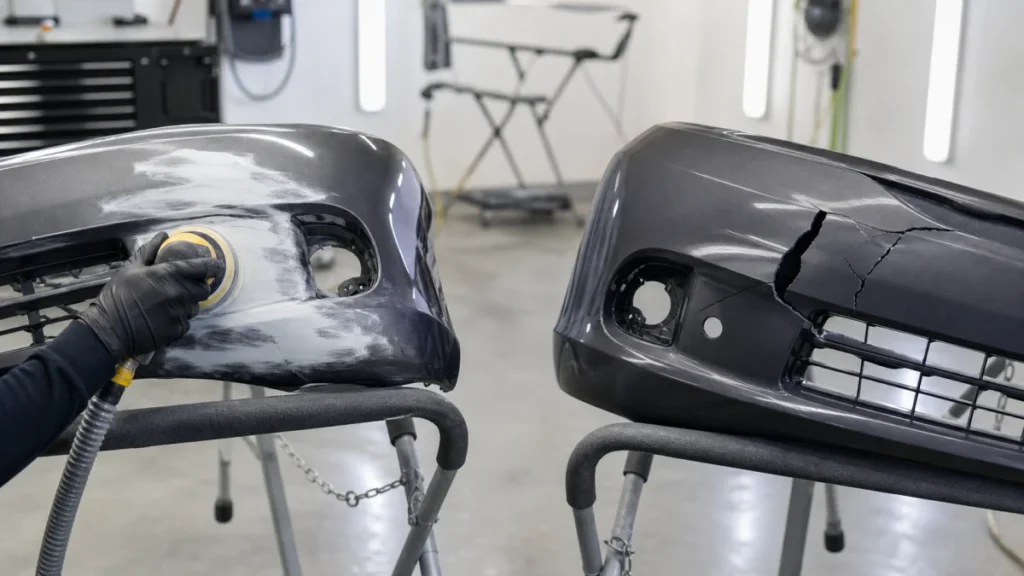
Repair may be appropriate when damage is limited, the cover remains structurally sound, and the bumper can be restored to proper fit and appearance. Scuffs, scratches, small dents, light distortion, and localized paint damage are often reviewed for repair first.
A repairable bumper still needs careful preparation. The damaged area may need sanding, reshaping, flexible repair material, primer, color coat, clear coat, and polishing. If the color is metallic or pearl, the refinishing plan matters because the bumper must look consistent with nearby panels under daylight, shade, and shop lighting.
Repair is more likely when:
- The damage is a surface scuff or shallow scrape.
- The bumper cover is not torn through.
- Mounting tabs are intact or repairable according to the repair plan.
- The bumper still lines up with the quarter panel, fender, lamps, and liftgate or hood.
- Sensors and lamps are secure and working properly.
- No hidden reinforcement or bracket damage is found.
When Replacement May Be the Better Option
Replacement may be recommended when the bumper cover is torn, badly cracked, stretched, deformed, missing important tabs, or unable to hold its shape. Replacement may also be needed when repair would take more labor than a reliable replacement or when sensor mounting areas cannot be restored properly.
Some cracks are more than cosmetic. A crack near a parking sensor hole, lamp opening, grille area, or mounting edge can affect how the bumper fits and how attached parts sit. If the bumper has been pushed inward, the cover may also hide damage to absorbers, brackets, reinforcement, or adjacent panels that need separate repair.
Bumper Repair or Replacement Comparison
| Damage type | Repair may work when | Replacement may be needed when |
|---|---|---|
| Paint scuffs | Scuffs are shallow and the cover is sound | Scuffs are part of a larger tear or deformation |
| Dents or distortion | The cover can be reshaped and aligned | The plastic is stretched, kinked, or will not hold shape |
| Cracks | Small crack in a repairable location | Large crack, missing material, or damage near sensors/tabs |
| Loose bumper | Clips or minor hardware can be addressed | Mounting tabs or brackets are broken beyond practical repair |
| Sensor area damage | Sensor mounts are intact and position is correct | Mounts are broken or sensor position cannot be restored |
Paint Matching Still Matters
Whether the bumper is repaired or replaced, refinishing is often part of the job. Bumpers are commonly made from plastic, while nearby panels may be metal. Color can appear slightly different across materials, curves, and lighting angles even when the paint formula is correct. A good refinish process uses the paint code as a starting point, then checks the color against the actual vehicle.
If the bumper damage includes scratches into adjacent panels, the repair may expand into auto body paint, scratch repair, or dent repair. The goal is not just to make the bumper look better by itself. The bumper, lamps, trim, and surrounding panels should work together visually and physically.
Why Photos Help, but Inspection Still Matters
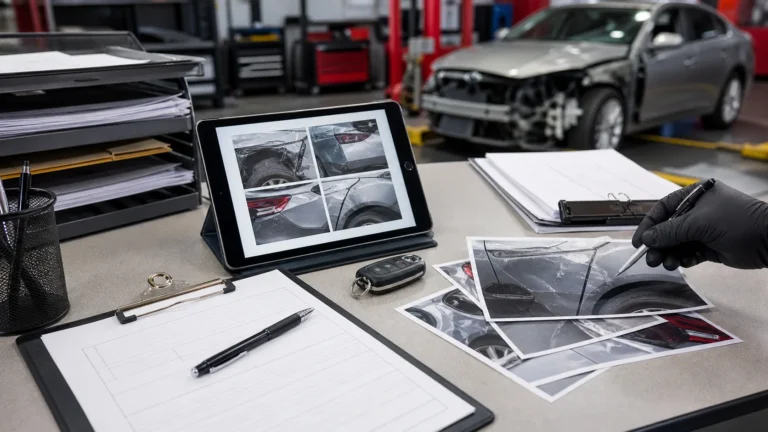
Photos are useful for starting an online estimate. Send wide photos of the whole vehicle, close-ups of the damage, angled photos of the bumper edge, and pictures showing gaps around lamps and panels. If the bumper is loose, pushed in, rubbing against a tire, or making noise while driving, include that in your message.
Photos cannot always show what is behind the cover. An in-person inspection or teardown may reveal broken brackets, absorber damage, wiring damage, or reinforcement concerns. If insurance is involved, hidden damage should be documented through the proper repair and claim process. You can learn more on our insurance repair page.
A Mid-Article CTA for Local Drivers
If you are deciding between bumper repair or replacement after a San Fernando Valley collision, Woodley Collision can inspect the damage and explain the practical options. Call 747-745-5353 or request an estimate. Our shop is at 7243 Woodley Avenue, Van Nuys, CA 91406, and we are open Monday to Friday, 9:00 AM to 7:00 PM (closed weekends). Consultations and estimates are available 24/7. Online estimate requests can be submitted anytime. Woodley Collision will follow up as soon as possible.
Local Scenarios That Change the Bumper Decision
A bumper scrape from a parking column near a shopping center is different from a rear-end impact in stop-and-go traffic. Parking damage may be limited to paint transfer and a shallow gouge. A traffic impact may push the bumper cover into brackets, lamps, exhaust trim, splash shields, or reinforcement parts. The repair plan should reflect how the damage happened and what symptoms appeared afterward.
For vehicles with parking sensors, blind spot features, or camera-related parts near the bumper, correct mounting matters. A part that looks close by eye may still need proper positioning. During inspection, mention any warning messages, sensor alerts, or changes in how driver assistance features behave after the impact.
Questions to Ask Before Approving Bumper Work
A clear repair conversation should explain what is visible, what still needs inspection, and why a repair or replacement is being recommended. Ask whether any sensors, lamps, brackets, or reinforcement parts are involved. Ask whether the bumper will need refinishing and whether adjacent damage is part of the repair plan.
You can also ask how the vehicle will be tracked during repair. If your vehicle is already at Woodley Collision, our repair status page gives customers a place to check in on progress.
FAQs
Is it cheaper to repair a bumper than replace it?
Often, but not always. A shallow scuff may be more practical to repair. A torn or badly distorted bumper can take enough labor that replacement becomes the better option. The right answer depends on damage, parts, labor, paint, and hidden components.
Can a cracked bumper be repaired?
Some cracks can be repaired, especially when they are small and in a repairable area. Large cracks, missing material, damaged mounting tabs, and sensor-area damage may make replacement more reliable.
Will my bumper color match the rest of the car?
A professional refinish process aims for a close visual match using the paint code, color checks, spray-out cards, and proper application. Plastic bumper covers can reflect light differently from metal panels, so process and inspection matter.
Should I replace a bumper before selling a car?
It depends on the damage and the vehicle. A proper repair may be enough for minor cosmetic damage. If the bumper is loose, cracked, or misaligned, a buyer or inspector may notice. Get a repair estimate before spending money unnecessarily.
Final CTA
For bumper repair or replacement in Van Nuys, contact Woodley Collision. We can review the bumper, surrounding panels, paint damage, and hidden impact concerns so you can make a repair decision based on the vehicle in front of you. Call 747-745-5353 or start with an online estimate.