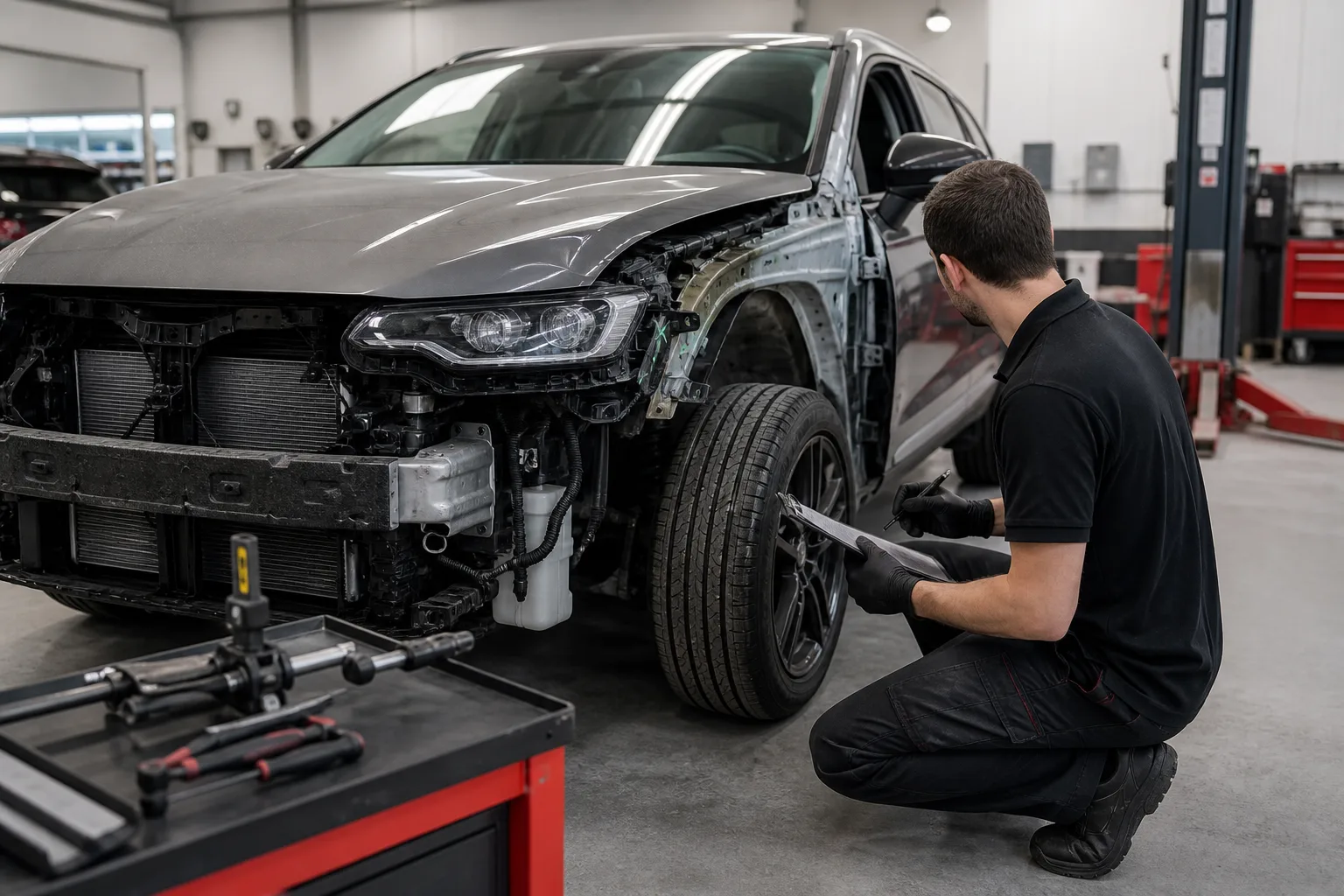
After a collision, the visible damage often gets all the attention. A scraped bumper, cracked light, dented fender, or scratched door is easy to see. Hidden collision damage is different. It can sit behind bumper covers, under trim, near mounting points, inside a wheel area, or behind panels that still look mostly normal from the outside.
For Van Nuys drivers, this matters because many local accidents happen at low to moderate speeds: parking lot impacts, rear-end collisions on Victory Boulevard, side swipes on narrow streets, and stop-and-go traffic impacts across the San Fernando Valley. Even when the car still drives, hidden damage can affect fit, safety, alignment, water sealing, and the quality of the final repair.
What Hidden Collision Damage Can Include
Hidden damage is any accident-related damage that is not obvious during a quick walkaround. It may be covered by exterior panels or may show up as a driving symptom rather than a visible dent. A careful collision repair inspection looks beyond the painted surface.
- Broken bumper brackets, clips, tabs, or absorbers.
- Damaged bumper reinforcement or impact bar areas.
- Shifted fender, hood, door, trunk, or liftgate alignment.
- Cracked lamp mounts, loose wiring, or damaged sensors.
- Radiator support, splash shield, or underbody damage.
- Wheel, suspension, steering, or alignment concerns.
- Glass channel, weatherstrip, or water leak problems.
- Frame or unibody damage that requires measurement and correction.
Why Cosmetic Damage Can Be Misleading
Modern bumper covers and plastic trim can flex during impact. Sometimes they return close to their original shape while the parts behind them absorb the force. That is why two vehicles with similar-looking bumper scuffs can need very different repairs. One may need refinish work only. The other may need brackets, absorbers, reinforcement review, sensor mounting, and panel alignment.
Paint damage can also hide deeper repair needs. If a panel is pushed in, kinked, or stretched, paint alone will not solve the problem. The surface has to be repaired correctly before refinishing. If a wheel was hit, the visible body damage may be less important than the steering, suspension, or alignment concern.
Warning Signs Your Vehicle Needs More Than Cosmetic Repair
Tell the repair shop about symptoms, even if they seem unrelated. A small detail can guide the inspection and prevent missed damage.
| Warning sign | Possible concern | Service to discuss |
|---|---|---|
| Vehicle pulls or steering wheel is off-center | Alignment, suspension, or structural shift | Mechanical repair review |
| Uneven panel gaps | Panel movement or mounting damage | Collision repair inspection |
| Bumper is loose or sagging | Broken tabs, clips, brackets, or reinforcement | Bumper repair |
| New wind noise or water leak | Door, glass, seal, or body opening issue | Glass replacement or sealing review |
| Dashboard warning light | Sensor, wiring, or system fault | Diagnostic and collision inspection |
| Trunk, hood, or door hard to close | Latch, hinge, striker, or panel alignment issue | Body repair and alignment |
Hidden Damage Behind the Bumper
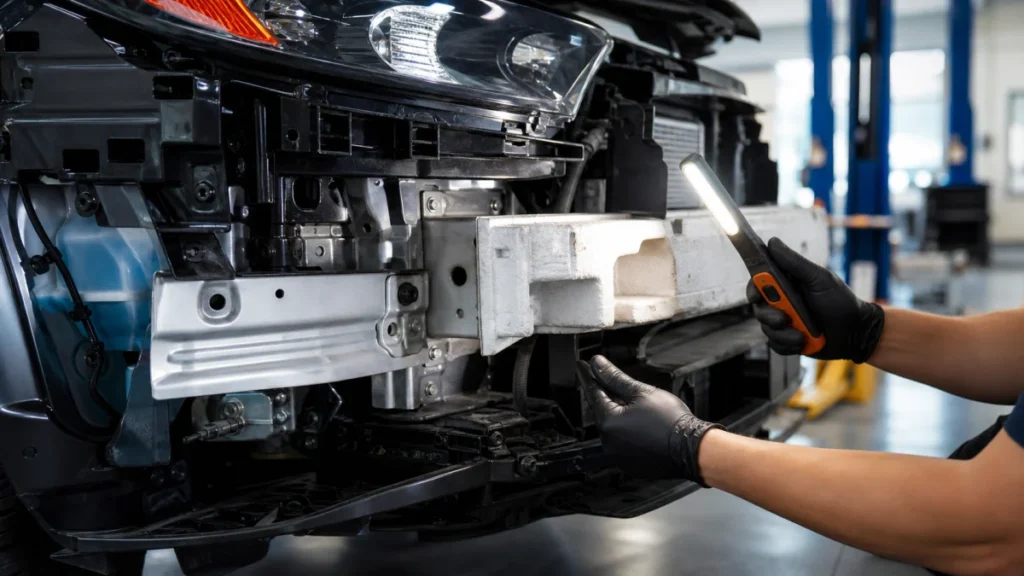
Bumpers are designed as systems. The painted cover may be the only part you see, but impact energy can move through the cover into hidden components. Damage behind the bumper can include cracked absorbers, bent reinforcement, broken brackets, torn splash shields, damaged wiring, or sensor mounting problems.
This is one reason a bumper estimate may change after the cover is removed. A technician cannot fully inspect covered components until the vehicle is opened up. If insurance is involved, those findings should be documented clearly for review. You can read more about claim-related repair steps on our insurance page.
Frame and Unibody Concerns
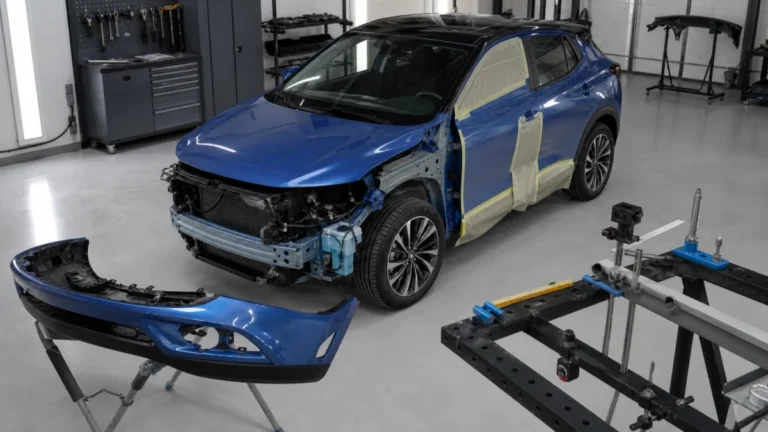
Many vehicles use unibody construction, where the body and structure work together. A collision can affect mounting points, aprons, rails, radiator supports, or other structural areas. Not every impact causes structural damage, but signs like uneven gaps, suspension symptoms, or parts that no longer fit correctly deserve careful review.
When structural correction is needed, frame straightening or structural measuring may be part of the repair plan. This work should be based on vehicle-specific inspection and repair requirements, not guesswork from the outside appearance.
Paint and Panel Damage Still Matter
Hidden damage does not make visible damage unimportant. Dents, scratches, and paint chips should still be repaired properly. Exposed metal can corrode, cracked paint can spread, and poor surface preparation can show through the final finish. A complete repair plan connects the hidden inspection with the visible finish work.
Depending on the impact, your vehicle may need dent repair, scratch repair, and auto body paint refinishing along with deeper collision repair.
Mid-Article CTA
If your car was hit and something feels off, do not rely on a quick glance. Woodley Collision can inspect visible and hidden damage at 7243 Woodley Avenue in Van Nuys. Call 747-745-5353 or request an estimate with photos and symptom notes.
Why Early Inspection Can Prevent Repeat Repairs
Hidden damage that is missed at the beginning can create problems after the visible repair is complete. A bumper may be refinished but still sit unevenly because a bracket was broken. A door may look better but still close poorly because the hinge, striker, or adjacent panel shifted. A headlamp may be replaced but remain loose because the mounting area behind it was damaged.
Early inspection helps connect the symptoms to the repair plan before time and money are spent on the wrong work. It also helps separate accident-related damage from older wear or unrelated problems. That distinction is important for clear communication with the vehicle owner and, when applicable, with the insurer reviewing the repair information.
Damage Areas That Deserve Extra Attention
Front-end impacts should be checked around lamps, radiator support areas, hood gaps, fender edges, splash shields, and cooling components. Rear impacts should be checked around the bumper reinforcement, trunk floor area, liftgate or trunk alignment, tail lamps, exhaust trim, and rear body openings. Side impacts deserve a close look at doors, rocker panels, mirrors, glass channels, wheel openings, and quarter panels.
If the impact was near a wheel, mention any vibration, steering pull, tire rubbing, or unusual brake feel. Those symptoms may require a mechanical or alignment review in addition to body work. The goal is to repair the vehicle as a whole system, not just improve the first visible dent.
What to Include With an Estimate Request
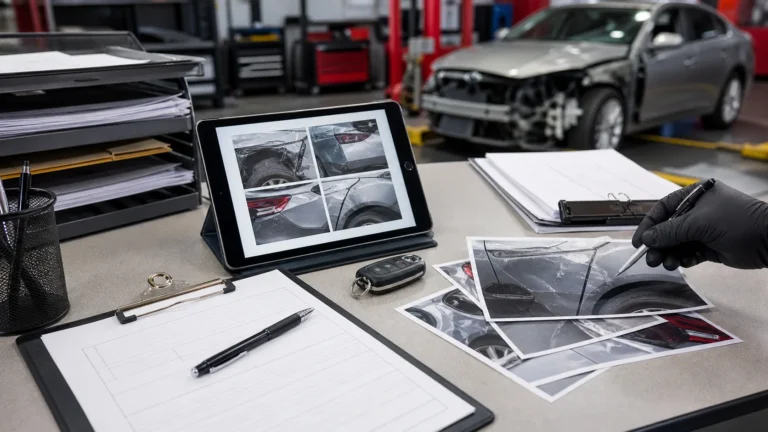
Send more than one close-up. Include wide photos of the full vehicle, close-ups of the impact area, angled shots that show dents and panel gaps, and any dashboard warning lights. Mention where the impact happened, how the vehicle drives, and whether you hear new noises or feel vibration.
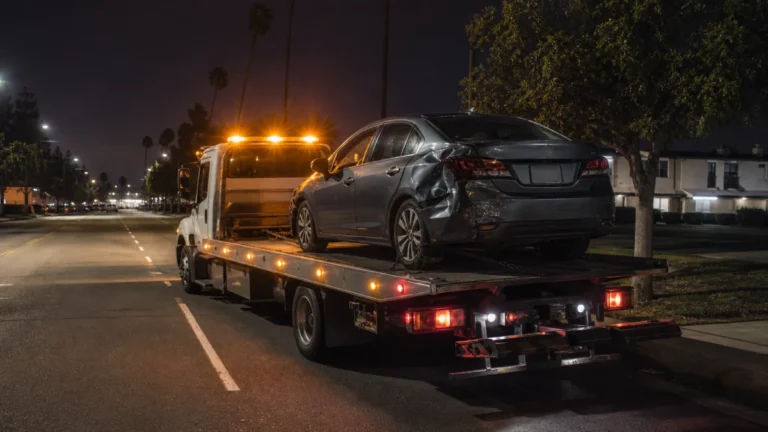
If the vehicle is not safe to drive, say that up front. If the damage involves broken glass, loose parts, wheel impact, or fluid leaks, the repair path may need to start with towing or an in-person inspection rather than a simple photo estimate.
FAQs
Can hidden collision damage exist after a low-speed crash?
Yes. Low-speed impacts can break bumper tabs, move brackets, crack absorbers, shift panels, or damage sensors. The vehicle may still drive, but it should be inspected if there are symptoms or visible alignment changes.
How do technicians find hidden damage?
They inspect panel fit, damage patterns, symptoms, and covered areas. Sometimes parts must be removed during teardown to see brackets, reinforcement, wiring, and structural areas behind the outer panels.
Will insurance cover hidden damage?
Coverage depends on your policy and the insurer’s review. The shop can document hidden damage and repair needs, but the insurer decides coverage according to the claim and policy terms.
What if my car looks fine but drives differently?
Driving symptoms matter. Steering pull, vibration, rubbing, warning lights, and new noises should be inspected. Those symptoms may point to alignment, suspension, wheel, or structural concerns.
Final CTA
For hidden collision damage repair in Van Nuys, contact Woodley Collision. We serve drivers across the San Fernando Valley with collision repair, bumper repair, paint refinishing, dent repair, frame straightening, glass replacement, and related mechanical repair. Call 747-745-5353, visit our contact page, or start with an online estimate.