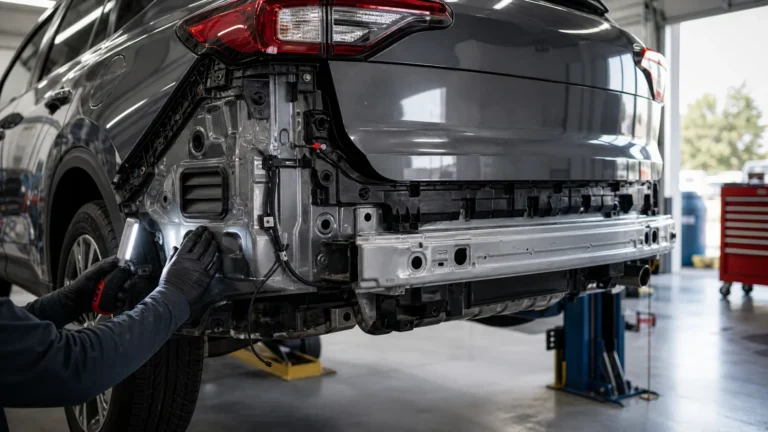
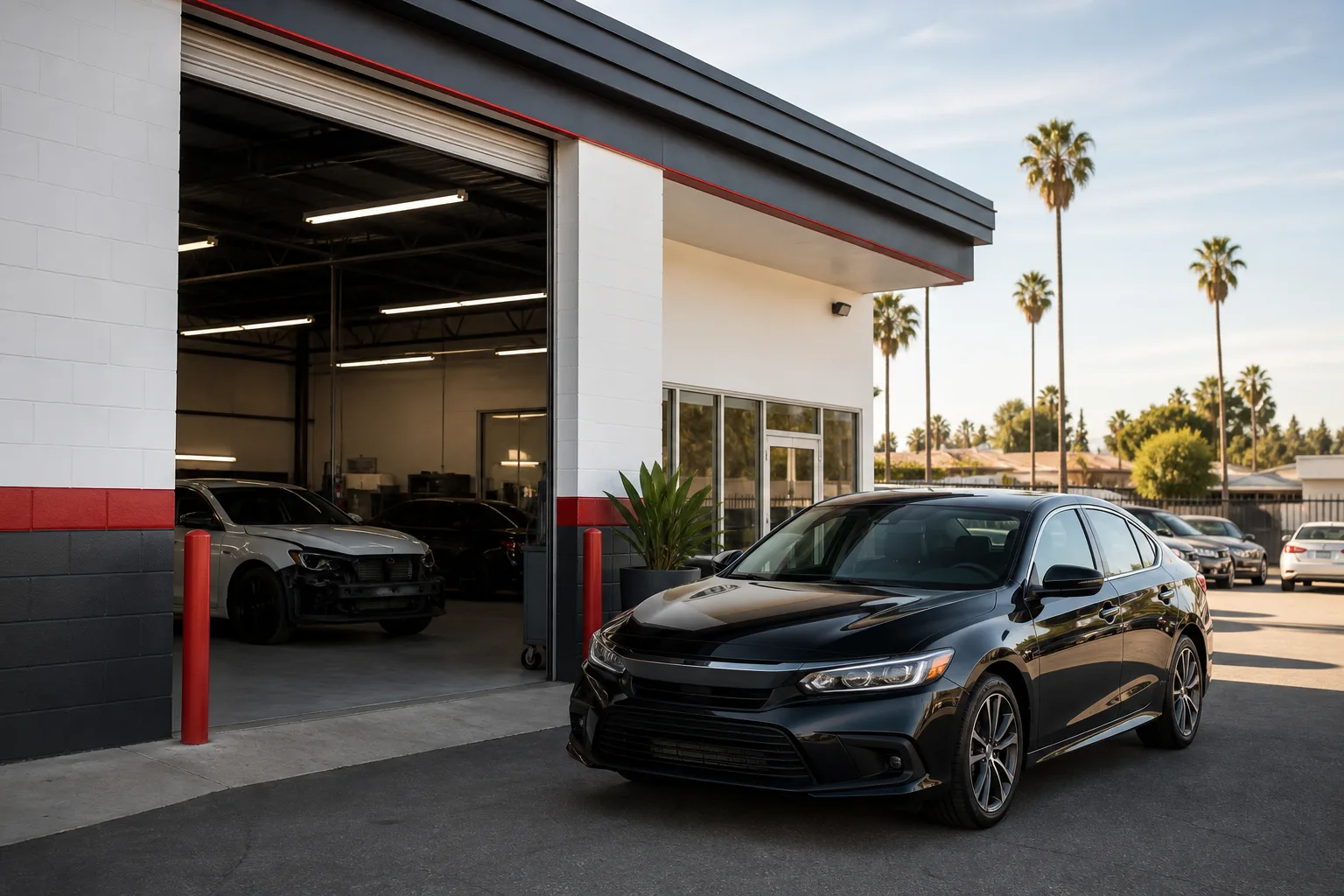
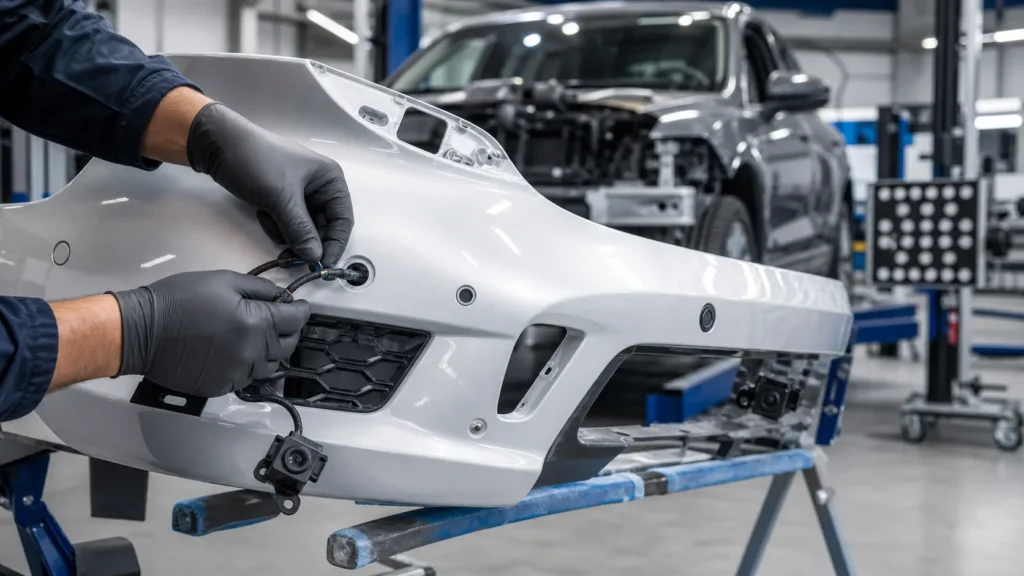
A bumper is no longer just a painted cover. Many vehicles use bumper-mounted parking sensors, blind spot components, cameras, radar modules, wiring harnesses, brackets, and clips that must fit correctly after a collision. Even a low-speed impact can move, crack, or loosen components that affect warning systems.
If your bumper was hit, repaired, removed, or replaced, the repair plan should consider both the visible damage and the technology behind the cover. This is especially important for drivers using bumper repair, collision repair, or collision-related mechanical repair services.

What May Be Behind the Bumper
- Parking distance sensors and retaining rings.
- Backup camera or front camera wiring.
- Blind spot monitoring components near rear corners.
- Radar modules or brackets on some vehicles.
- Impact absorbers, reinforcements, and sensor mounts.
- Fog lamps, marker lamps, reflectors, and harness clips.
- Washer lines or headlamp cleaning components on some models.
Symptoms to Report After Bumper Damage
| Symptom | Possible cause | Why to mention it |
|---|---|---|
| Parking sensor beeps constantly | Misaligned sensor, damaged bracket, or wiring issue | The bumper may need sensor inspection, not only paint repair |
| Camera image is crooked or blank | Camera mount or wiring damage | Fit and function should be checked before delivery |
| Blind spot warning light stays on | Module, bracket, or nearby body damage | Related collision damage may be hidden |
| Bumper corner sticks out | Broken retainer or tab | Loose bumper fit can affect sensors and appearance |
| Warning message after repair | System needs inspection or procedure review | Technology-related repairs should be documented |
Repair Structure: A Better Order of Operations
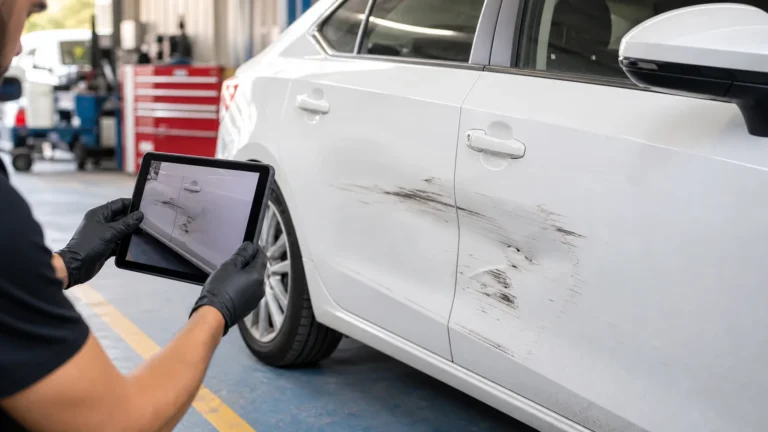
- Document the visible bumper damage.
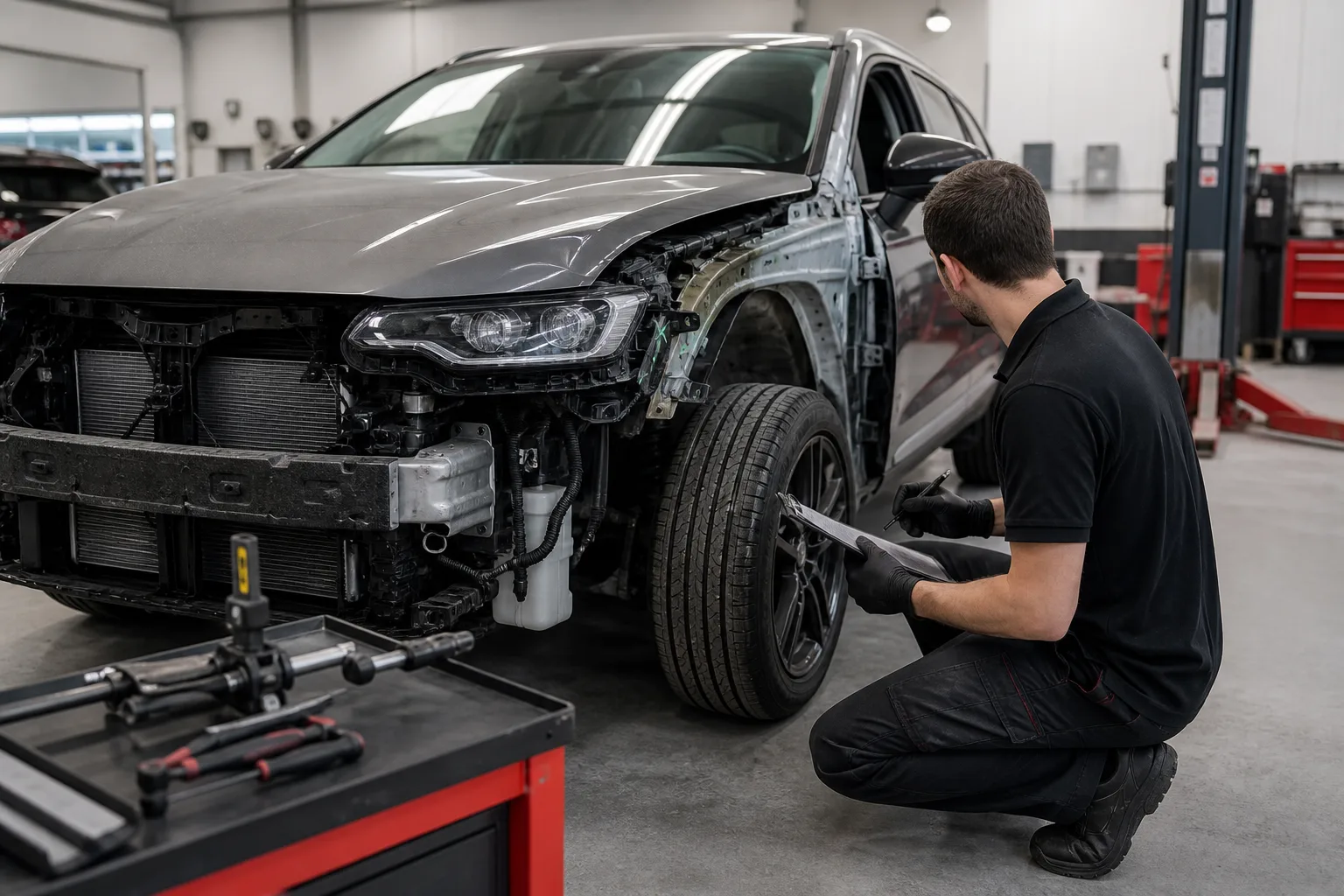
- Inspect mounting points, brackets, wiring, lamps, and nearby panels.
- Decide whether the bumper cover can be repaired or should be replaced.
- Confirm sensor openings, retainers, and brackets fit correctly.
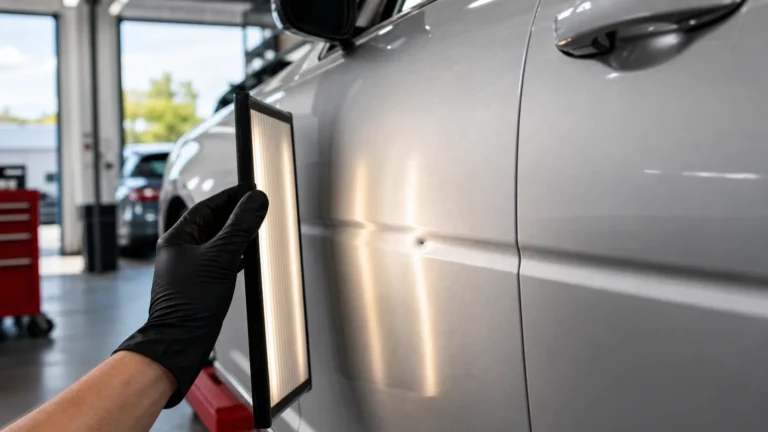
- Refinish the bumper if paint repair is required.
- Reassemble carefully and check system behavior.
- Review any required procedures based on the specific vehicle.
This process connects directly with our article on bumper repair versus replacement. A cracked cover, broken tabs, or damaged sensor mounts can change the right repair decision.
Why Paint and Sensor Fit Both Matter
A bumper can look good and still have a sensor problem. A sensor can work intermittently if its bracket is loose or its angle is wrong. At the same time, refinishing must be handled correctly because bumper covers use flexible materials and need proper preparation. If refinishing is part of the job, the repair may also involve auto body and paint procedures.
Local Service-Area Links
Woodley Collision serves bumper and collision repair customers from Van Nuys, Sherman Oaks, Lake Balboa, Panorama City, and Northridge. If your vehicle has a warning light, loose bumper corner, sensor alert, or camera issue after impact, mention it when you request an estimate.
Before You Approve Bumper Repairs
Ask what will be inspected behind the bumper, whether sensor parts are involved, whether any hidden damage may be found after removal, and how changes will be documented if insurance is involved. You can also review our insurance documentation checklist if a claim is open.
For help with bumper sensors, camera-related concerns, or collision damage, request a free estimate or call Woodley Collision at 747-745-5353.